
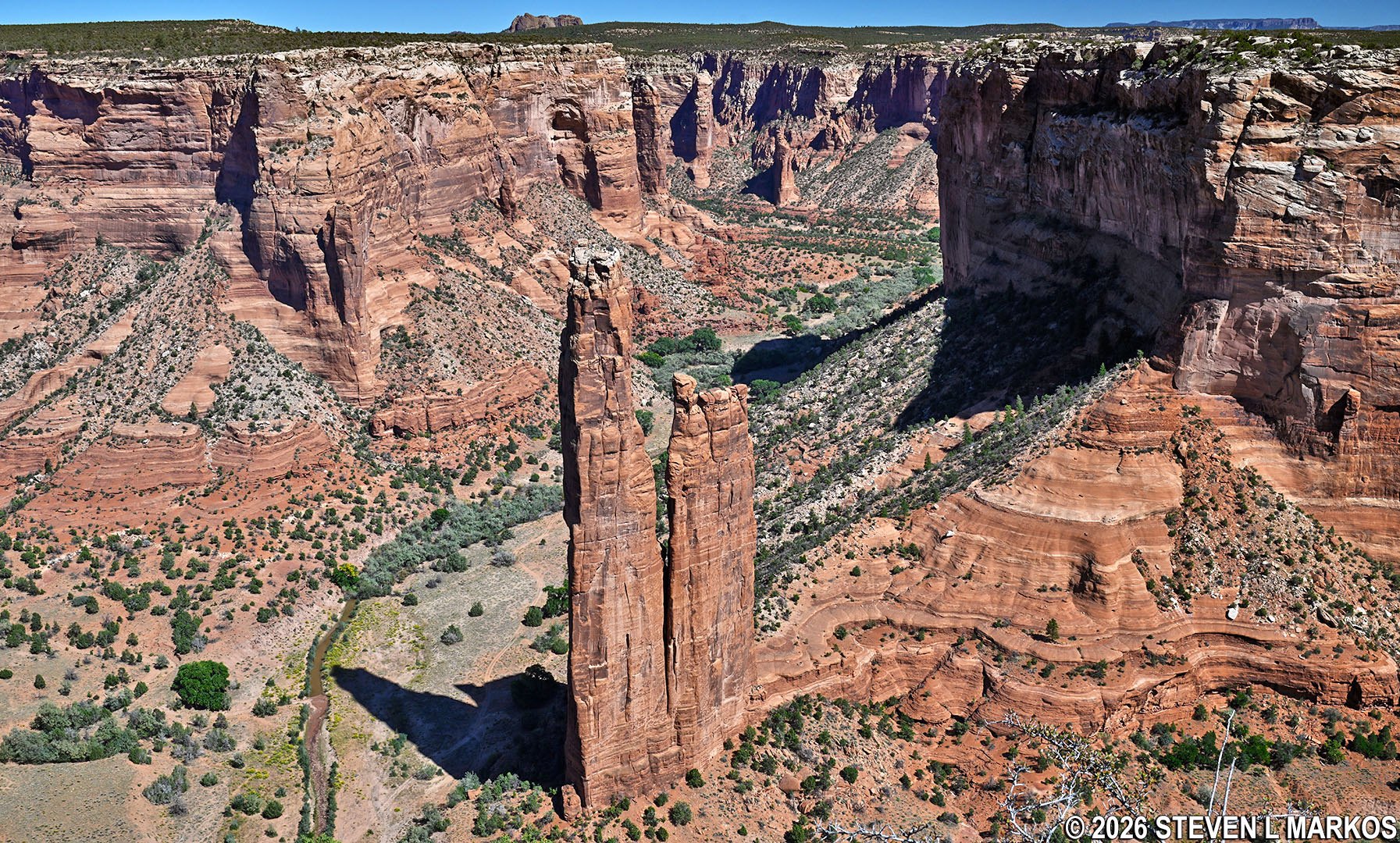
View of Spider Rock and Face Rock from the Spider Rock Overlook on Canyon de Chelly National Monument’s South Rim Drive
SOUTH RIM DRIVE
STOP 7: SPIDER ROCK OVERLOOK
The last—and best—stop on the scenic drive along Canyon de Chelly National Monument’s (pronounced de Shay) South Rim Drive is the Spider Rock Overlook. Both it and the previous stop, Face Rock Overlook, are located on Spider Rock Road, a turnoff from South Rim Drive that comes just before the pavement ends and the road turns to dirt. Drive all the way to the end of Spider Rock Road to reach the overlook. Face Rock comes first, and Spider Rock is another mile down the road.
A concrete path leads 200 yards from the parking lot to three separate viewpoints. The first two are right next to each other and are both wheelchair accessible.
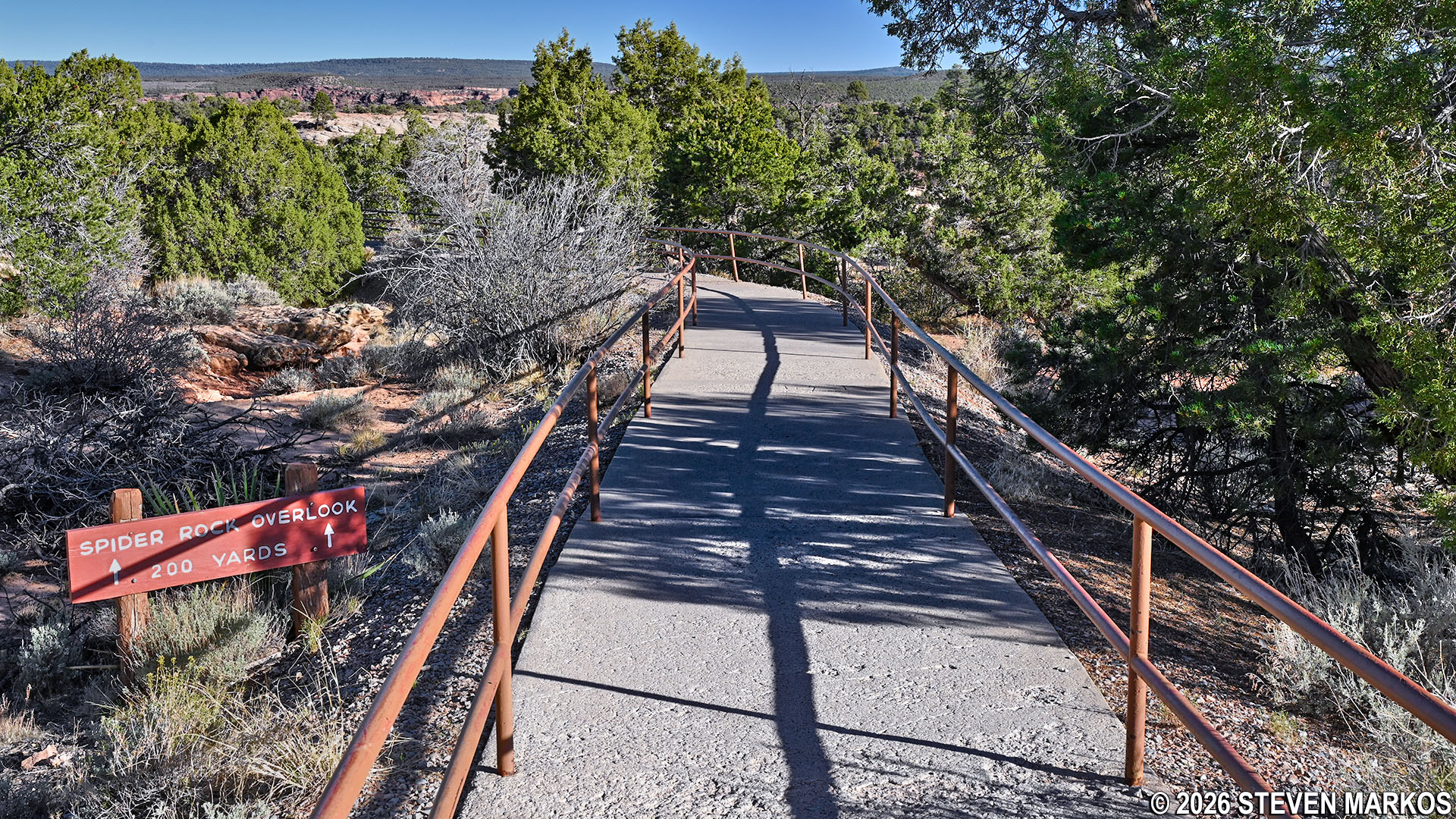
Concrete path to the Spider Rock Overlook on South Rim Drive at Canyon de Chelly National Monument

Wheelchair-accessible observation platform at the Spider Rock Overlook on South Rim Drive, Canyon de Chelly National Monument
The third viewpoint at Spider Rock Overlook is slightly difficult to reach. The path changes from concrete to uneven rock slabs and is no longer wheelchair accessible. Depending on the person, it may still not be accessible due to the limited space between some fairly large boulders. It is not a tight squeeze, but if you are slightly claustrophobic or have a larger stature, just be aware. Aside from a different view of the canyon, you won’t be missing out on anything if you only go to the first two viewpoints.
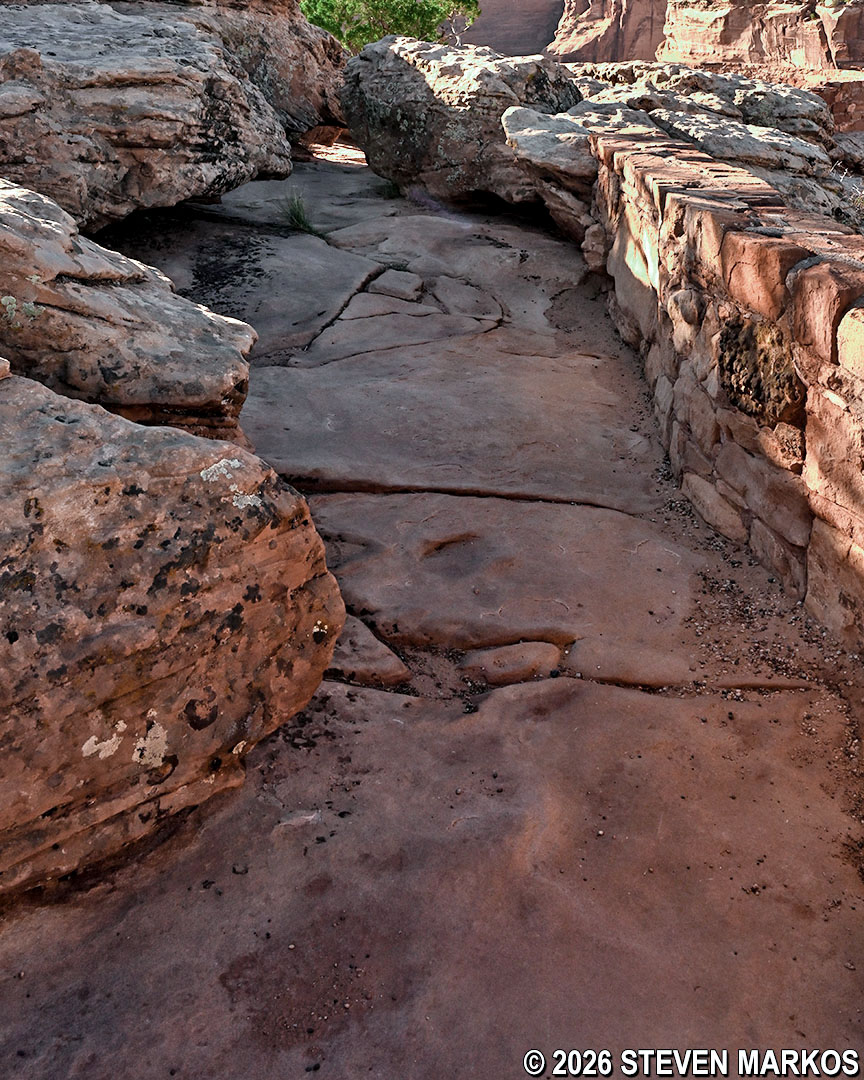
Uneven rocky path on the way to the third viewpoint at the Spider Rock Overlook on South Rim Drive, Canyon de Chelly National Monument
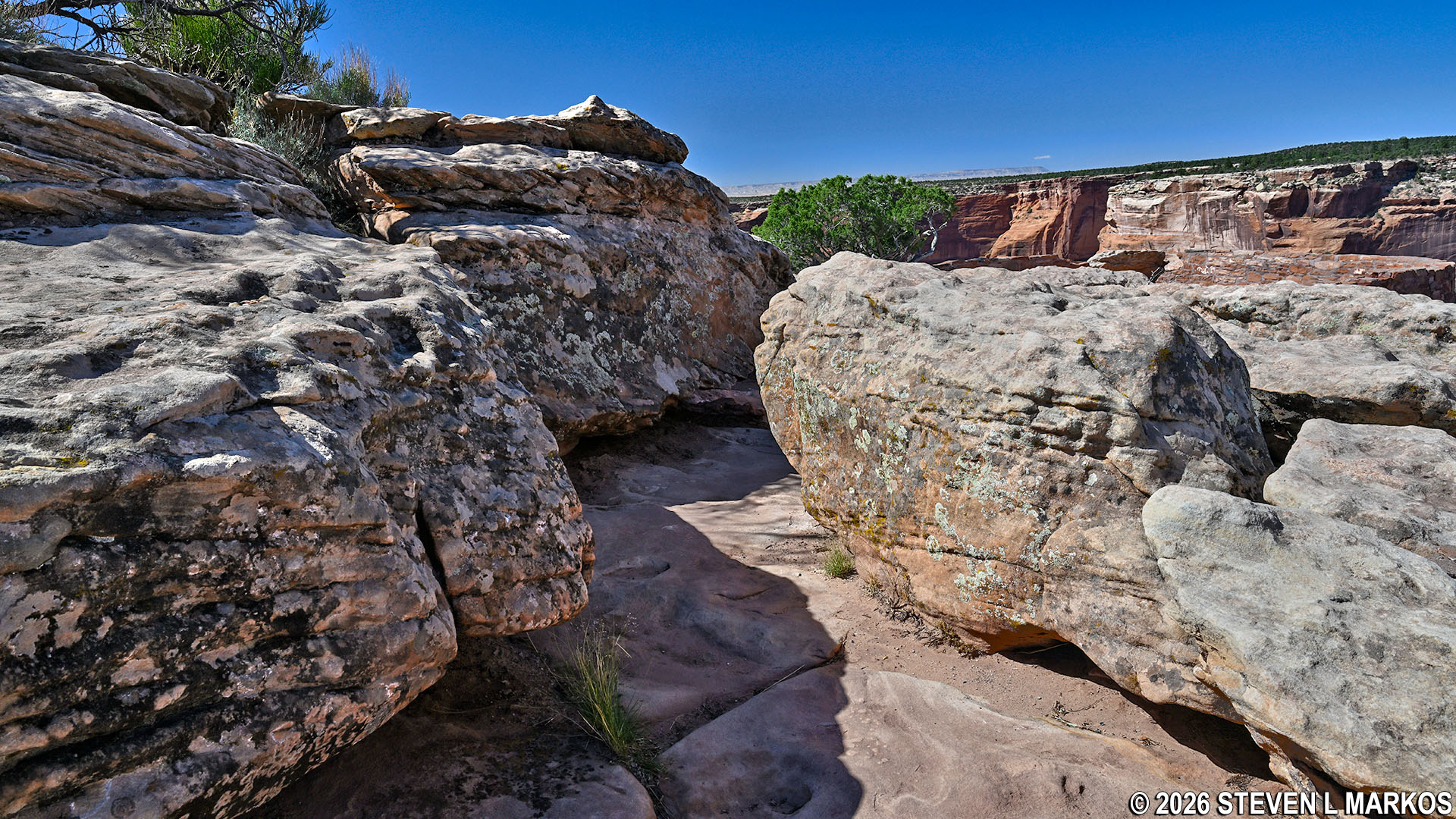
Large boulders on the path to the third viewpoint of the Spider Rock Overlook on South Rim Drive, Canyon de Chelly National Monument
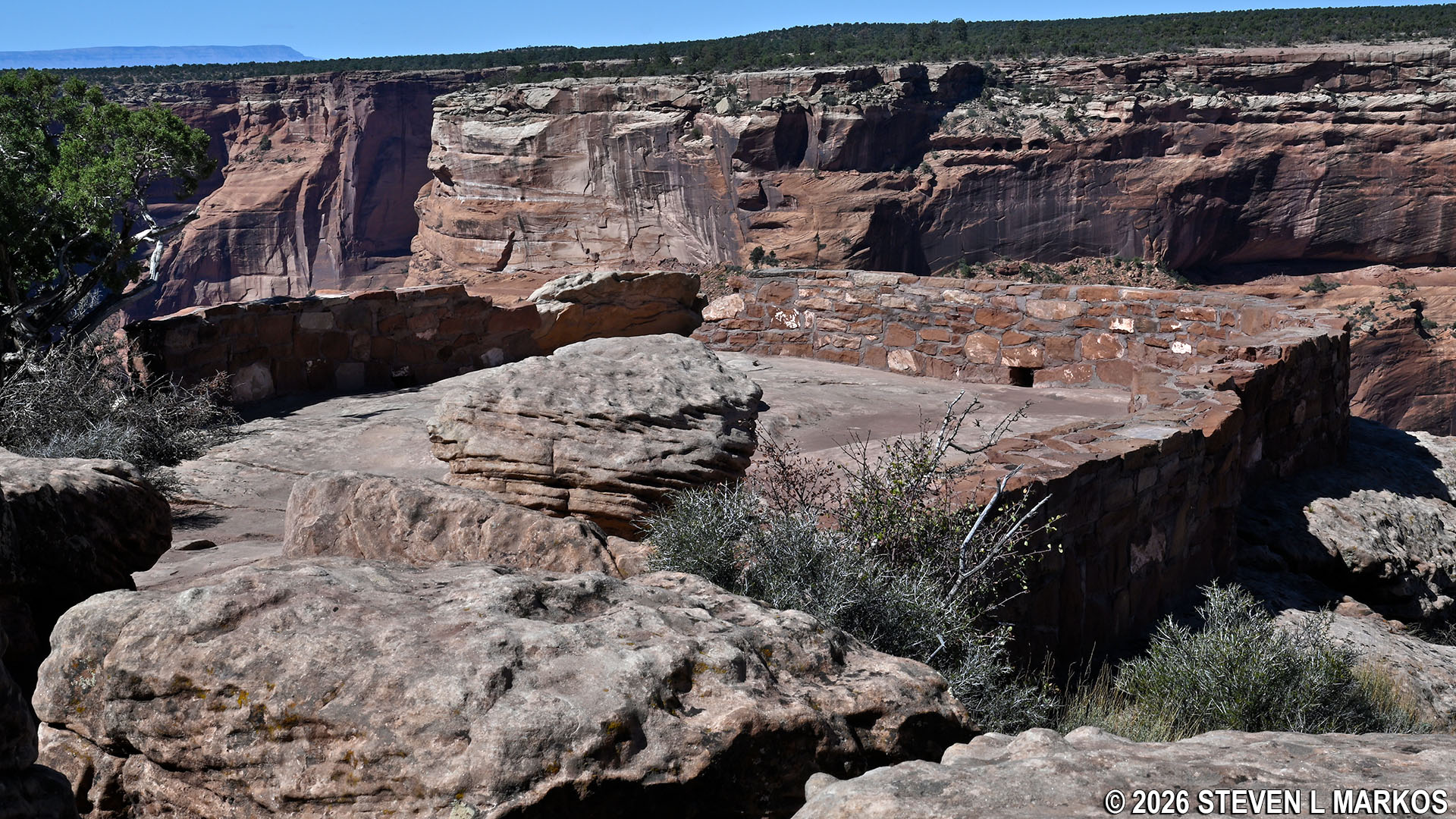
Non-wheelchair-accessible observation deck at the Spider Rock Overlook on South Rim Drive, Canyon de Chelly National Monument
Spider Rock is located at the junction of Canyon de Chelly and Monument Canyon, the third largest canyon in the park. The two red sandstone towers rise almost 800 feet up from the canyon floor. It is Canyon de Chelly’s most well-known and recognizable rock formation. Spider Rock has appeared in numerous major motion pictures, including Poltergeist II (1986), Wild Wild West (1999), and The Lone Ranger (2013).

View of Spider Rock from the Spider Rock Overlook on South Rim Drive, Canyon de Chelly National Monument
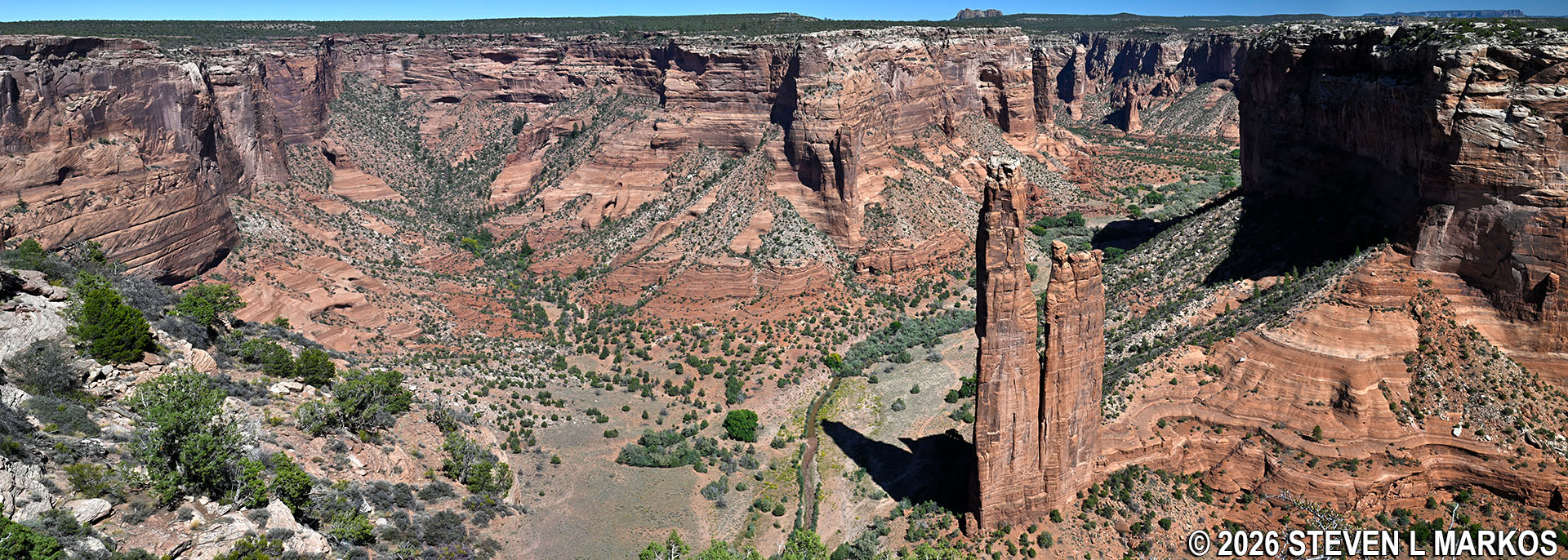
Panoramic view from the Spider Rock Overlook at Canyon de Chelly National Monument (click to enlarge)
Spider Rock is also the spiritual and geographical center of the Navajo Nation. According to Navajo legend, Spider Rock is the home of Spider Woman, an important figure in their creation story. She is said to have given the Navajo the gift of weaving. She is also the main character in a story that the Navajo tell their children to encourage good behavior. Face Rock reports children’s misbehavior to Spider Woman, who lives atop Spider Rock. She then snatches the naughty children and takes them back to her lair where she eats them. According to the story, the white rocks on the top of Spider Rock are the bleached bones of children who didn’t listen to their parents.

View of Face Rock and Spider Rock from the Spider Rock Overlook, Canyon de Chelly National Monument

View of the top of Spider Rock from the Spider Rock Overlook, Canyon de Chelly National Monument
Also visible from the overlook is Black Rock Butte. It is a volcanic plug composed of minette that rose to the surface along the fault line below. Minette is a dark-colored, ultrapotassic igneous rock that originates from the deep mantle. Another example of this type of formation is Ship Rock in New Mexico, about sixty miles northeast, just across the border.
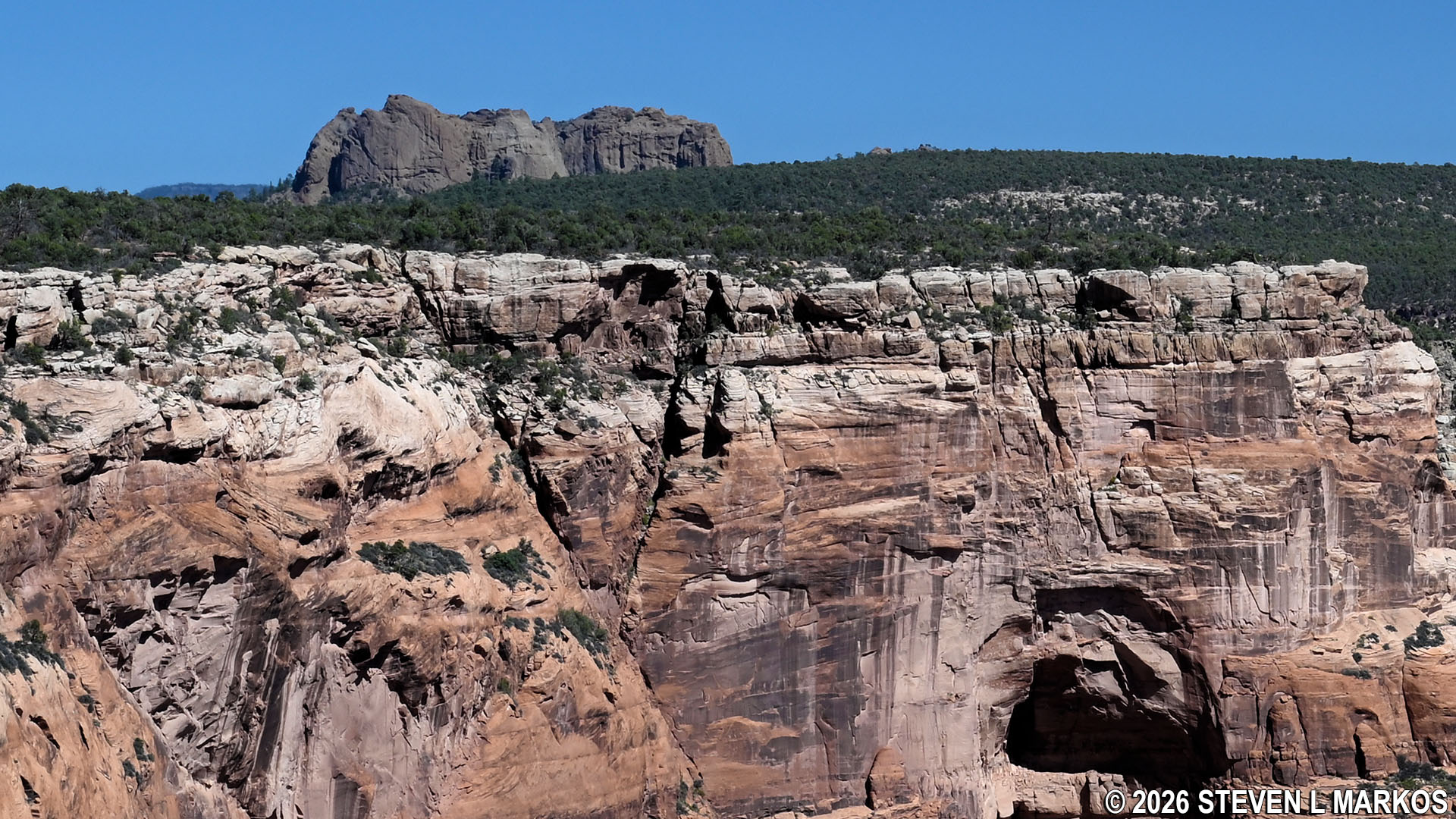
View of Black Rock Butte from the Spider Rock Overlook on South Rim Drive, Canyon de Chelly National Monument
Previous Stop | South Rim Drive Home Page
With a few exceptions, use of any photograph on the National Park Planner website requires a paid Royalty Free Editorial Use License or Commercial Use License. See the Photo Usage page for details.
Last updated on March 18, 2026


